

Videos

Videos van onze leden

Nederland herbergt vooraanstaande onderzoekers. Wat ze in hun projecten doen om meer te leren over leven en evolutie? Dat is soms best complex. Precies waarom het Origins Center in een serie leerzame video’s uitlegt wat wetenschappers nou precies onderzoeken. En: waarom.

Naar Youtube kanaal

Was het toeval dat mensen evolueerden?

Ken Kraaijeveld, onderzoeker Origins Center (Engels)

Bekijk de video

Begrijpen we de evolutie goed genoeg om deze te voorspellen?

Meike Wortel, onderzoeker Origins Center (Engels)

Bekijk de video

Hoe zijn we aan zoveel complexe soorten gekomen?

Renske Vroomans, onderzoeker bij het Origins Center (Engels)

Bekijk de video

Webinars

Het Origins Center organiseert vanaf oktober tot juni een serie webinars. In deze online sessies, open toegankelijk voor wetenschap en publiek, brengen vooraanstaande wetenschappers je op de hoogte van nieuwe wetenschappelijke ontdekkingen en uitdagingen.

Doe mee

Webinar: Jim Cleaves

Bekijk de video

Webinar: Michael Russell

All the constituents for life’s emergence were there, at a submarine alkaline vent, about 4.4 billion years ago.

Bekijk de video

Webinar: David Deamer

Prof. Deamer will describe how mixtures of certain organic compounds present on the early Earth can assemble into systems of encapsulated polymers referred to as protocells.

Bekijk de video

Webinar: Daniel Needleman

The spindle, the self-organizing structure that segregates chromosomes during cell division, shows remarkable diversity between species. I will present work in which we aim to integrate mechanistic and evolutionary studies of spindles.

Bekijk de video

Webinar: Paola Caselli

Our Solar System was born from a dark and cold cloud made out of molecular gas and small dust particles. Thanks to powerful telescopes, we can now study in detail these clouds, their chemical ingredients and their evolution.

Bekijk de video

Webinar: Dieter Braun

How can we derive answers to the question of the origin of life? Instead of simply collecting facts, biological systems can now be directly tested by synthetically reconstructing them.

Bekijk de video

Webinar: Betül Kaçar

In this talk, Betül will survey her group’s efforts in towards establishing a molecular paleobiology approach. She will further discuss how exploring the early evolution of ancient biomolecules, protein-cofactor interaction interfaces and metallosystems contribute to our understanding of origins and first life on Earth.

Bekijk de video

Webinar: Eörs Szathmáry

His main interest is theoretical evolutionary biology and focuses on the common principles of the major steps in evolution, such as the origin of life, the emergence of cells, and the origin of animal societies.

Bekijk de video

Webinar: Kate Adamala

Her research on prebiotic RNA replication provided an experimental scenario for the RNA world hypothesis of the origin of life. She has worked on constructing liposome bioreactor synthetic cells.

Bekijk de video

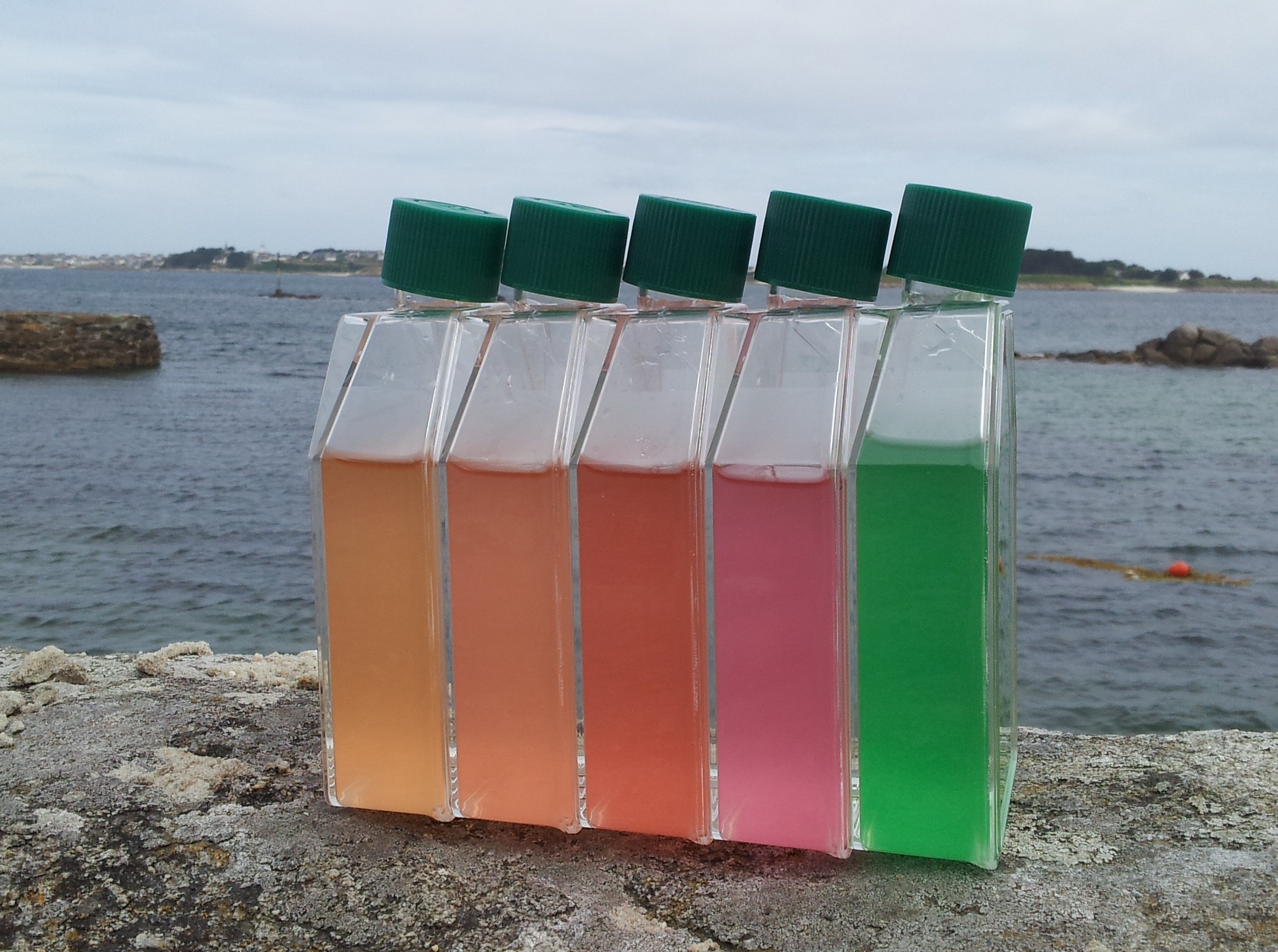
Webinar: Jef Huisman

Vibrational modes of water predict spectral niches for photosynthesis in lakes and oceans. Webinar by Jef Huisman, professor Aquatic Microbiology, University of Amsterdam (UvA)

Bekijk de video

Webinar: Charles Cockell

Exploring microbial interactions with rocks on the International Space Station - Charles Cockell, professor of Astrobiology, University of Edinburgh

Bekijk de video

Universiteit van Nederland

Nederlandse topwetenschappers geven in de Universiteit van Nederland gratis, korte internetcolleges. Desktop full screen. tablet op schoot, mobiel bij de hand? Kijk naar enkele van de beste hoorcolleges van Nederland.

universiteitvannederland.nl

De gekste planeten (Engelstalig)

Bekijk de video

Waarom moet er buitenaards leven zijn in de buurt van Jupiter?

Prof. dr. Bert Vermeersen, planeetwetenschapper TU Delft

Bekijk de video

Begon al het leven bij een steen?

Dr. Inge Loes ten Kate, astrobioloog Universiteit Utrecht

Bekijk de video

Is er leven op de maan?

Prof. dr. Bert Vermeersen, planeetwetenschapper TU Delft

Bekijk de video